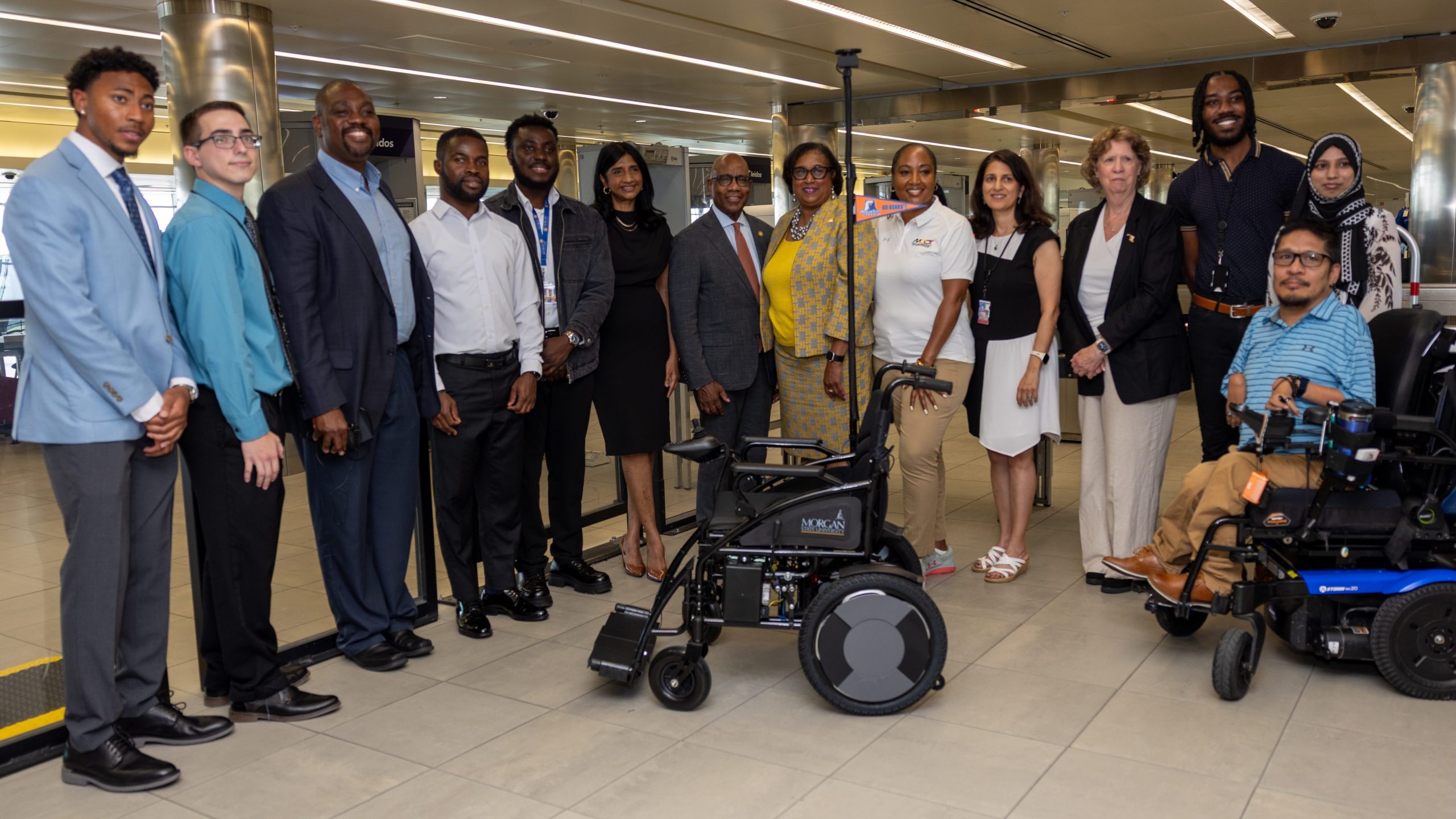
Everyone should have access to airport travel, but navigating what feels like mile-long terminals and moving walkways can be nearly impossible for people with mobility challenges. A design competition to spur innovation and equity in accessibility led researchers at Morgan State University’s Center for Equitable AI and Machine Learning Systems (CEAMLS), SMARTER Center (Safety Mobility Advancements Regional Transportation and Economics Research), and the National Transportation Center (NTC)––to develop a wheelchair with the potential to transform accessibility.
Their self-driving wheelchair uses sensors and pre-mapped routes to help travelers with physical disabilities or impairments affecting movement move freely, safely, and efficiently through the airport.
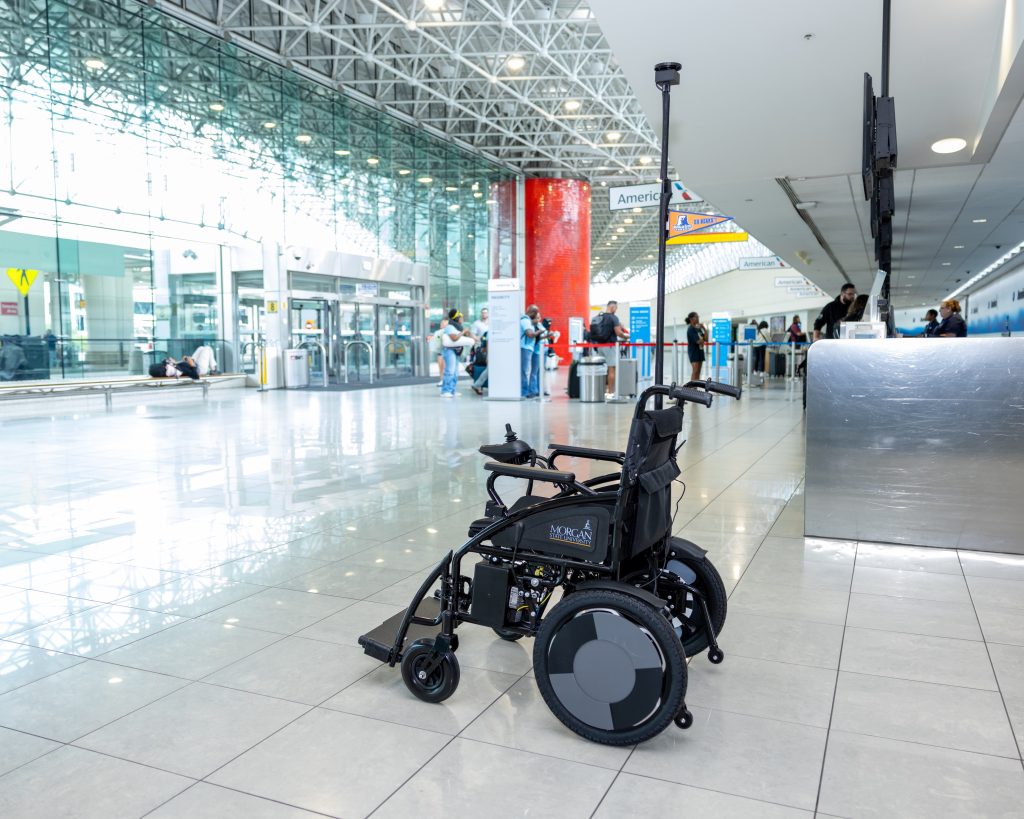
Individuals use an app to summon a wheelchair. It then scans their ticket and transports them to their departure gate.
As Kofi Nyarko, PhD, professor of Computer & Electrical Engineering and CEAMLS director at Morgan State, explained, “People with mobility challenges want to be able to get up and go like everybody else, with minimal roadblocks and a sense of autonomy.”
After testing in the lab, Dr. Nyarko and Mansoureh Jeihani, PhD, director of Morgan State’s SMARTER Center, forged a partnership with Baltimore/Washington International Airport (BWI), where they’re piloting the wheelchair, proving its safety and gaining visibility.
The advocacy of one BWI employee made the difference for the team, because he connected them with people who had decisionmaking power to approve the pilot. “You need a champion, that one individual who can understand your goal, see your vision, and communicate that vision so that their colleagues see it too,” said Dr. Nyarko.
To expand, the CEAMLS, NTC, and SMARTER Center teams will need to partner with airlines, which provide wheelchairs to travelers. They envision a future with increased mobility for everyone.
“This doesn’t have to be limited to airports or to physical immobility,” said Dr. Nyarko. “We’re exploring other environments, like hospitals and campuses, where people want to move freely and confidently through a space, despite how complex or chaotic it is.”